
Strength training after 50, led by a Doctor of Physical Therapy.
Losing strength is common with age, but it is not inevitable. Our Doctors of Physical Therapy build a strength, mobility and balance plan around your joints, your history and the things you want to keep doing, from 18 holes to picking up the grandkids. We're in Leawood, a short drive from anywhere in Overland Park.
Complimentary. 20 minutes. Doctor-led.
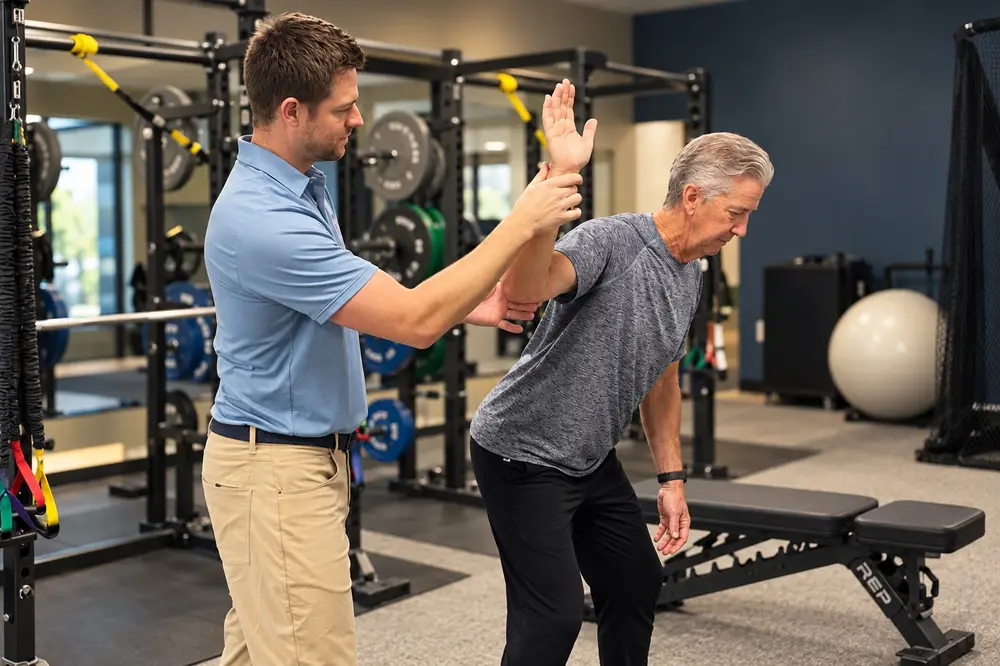
Strength is what keeps you independent, active and in the game
Muscle is more than how you look. It protects your joints, supports your balance, and powers everything from carrying groceries to your golf swing. Adults who keep training stay capable longer. Those who stop tend to feel it first on the stairs, the course and the floor with the grandkids.
3–8%
Muscle mass lost per decade after age 30, with faster loss after 60.
Scientific American
2+ days
Of muscle-strengthening activity each week recommended for adults 65 and older, plus balance work.
CDC
The good news: research over several decades shows resistance training can increase muscle mass in older adults. The challenge is starting in a way that respects old injuries, stiff joints and arthritis, and then sticking with it. That is where a physical therapist-led program helps.
What we train in every adult over 50
Your 90-minute assessment measures each one, so your plan starts from real numbers instead of guesses. We retest at your progress reviews.
Strength
Pressing, pulling, squatting and grip strength, loaded safely and progressed every few weeks. Grip and leg strength carry into nearly everything you do.
Mobility
Rotation through your neck, shoulders, mid-back and hips. Keeping it lets you reach, turn and swing without your lower back taking the strain.
Balance and stability
Single-leg control and steady footing on uneven ground. Balance training is part of the CDC's recommendation for older adults for a reason.
Power
The ability to move quickly: catching yourself on a misstep, getting up off the floor, adding speed to your swing. We test it with a vertical jump and chest pass.
Pain management
Hands-on care such as manual therapy and dry needling, as clinically indicated, so a sore knee or back doesn't stop your training.
Habits that last
Programming in the RobertsPT App, travel routines for time away, and nutrition guidance for strength and recovery during your first 30 days.
Physical therapist or personal trainer?
Why start with a Doctor of Physical Therapy instead of a gym
Good trainers help a lot of people. If you have pain, an old injury, a joint replacement or a long break from exercise, a Doctor-led program gives you a safer, more specific starting point.
| Typical gym or trainer | RobertsPT | |
|---|---|---|
| Who designs your plan | Fitness professional | Doctor of Physical Therapy |
| Your starting point | General fitness check, if any | 90-minute assessment of mobility, strength, balance and power |
| Pain and old injuries | Worked around or referred out | Assessed and treated in the same place |
| Hands-on care | Not available | Manual therapy and dry needling, as clinically indicated |
| Progress | Varies | Retested against your baseline at each review |
Private when you need it, semi-private when you're ready
Most clients start with a structured 30-day program, then keep their progress with ongoing training. Your Doctor recommends the format that fits your goals and schedule.
First 30 days
30-Day Launch
Two or three sessions a week for four weeks, private or a hybrid of private and semi-private. You get a personalized mobility and strength plan, app access between sessions, nutrition guidance and a progress review.
Ongoing
Stay in the Game, For Life
An annual membership for Doctor-led strength and mobility care. Members train semi-privately twice a week on programming that updates every five weeks, with weekly scheduling flexibility.
Format
Semi-private training, explained
You train in a small group, each person on their own individualized program, with a Doctor of Physical Therapy overseeing every session. It costs less than private sessions and adds the accountability of training alongside others.
For golfers over 50
Your strength is your distance
Clubhead speed comes from rotation, leg drive and power, the same qualities that fade first without training. Training those qualities pays off beyond the scorecard too: in how you feel after a round, on the back nine, and walking up the hill at 18.
We measure clubhead speed in your assessment and retest it at your progress review. See how our golf physical therapy in Leawood and Overland Park works, or explore golf performance training.
Three steps to a plan built for your body
-
Body Screening
A Doctor of Physical Therapy checks key areas of your mobility and movement and shows you the limitation most likely holding you back. You'll also know whether RobertsPT is the right fit.
-
Golf & Longevity Assessment
Full testing of mobility, strength, balance and power. You leave with your three highest-priority limitations, your first 30-day targets and a written Body Roadmap.
-
Your plan
Your Doctor recommends one next step, most often a 30-Day Launch that leads into ongoing training, or focused private care for one specific problem.
Start with step one. It's free.
Strength training for adults over 50 in Leawood and Overland Park
RobertsPT is at Leawood Plaza on State Line Road, on the Kansas and Missouri line. Active adults train with us from Leawood, Overland Park, Prairie Village, Mission Hills and south Kansas City, many of them retired or nearly there and determined to stay that way: strong, mobile and busy.
Early-morning appointments start at 6 AM Monday through Friday, so you can train before work, a tee time or the rest of your day.
- Leawood
- Overland Park
- Prairie Village
- Mission Hills
- Olathe
- Lenexa
- Kansas City, MO
- Kansas City, KS
Doctors of Physical Therapy who train active adults
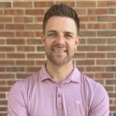
Dr. Wade Roberts
PT, DPT, CSCS
Founder of RobertsPT and a Certified Strength and Conditioning Specialist. Dr. Roberts helps active adults stay strong, mobile and pain-free, especially in the sports they love most, like golf and pickleball.
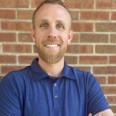
Dr. Jeremy Schmidt
PT, DPT · Dry needling & manual therapy
Dr. Schmidt takes an evidence-based, hands-on approach to musculoskeletal pain and chronic tension, helping clients return to the activities they love stronger and more confident.
Getting back what time took away
“As time has passed since my football career, I've lost flexibility, and with it, the ability to make a full backswing. After starting with RobertsPT, they immediately got me going on exercises to improve my turn and rotation. I'm convinced their program will increase my distance with every club, and make golf more fun again.”
“The performance training I've done at RobertsPT has helped me stay competitive with younger golfers and continue to feel strong through the season.”
Strength training after 50 FAQ
Is it safe to start strength training after 50, 60 or 70?
For most people, yes, when the starting point fits your body. That is why we begin with a screening and a full assessment rather than a stock workout. If anything we find suggests you need imaging or a physician's care first, we will tell you and help coordinate it.
Is it too late to build muscle in my 60s or 70s?
No. Research over several decades shows resistance training can increase muscle mass in older adults. Progress depends on consistency and a program matched to your ability, which is what we build and retest with you.
How often should adults over 50 strength train?
The CDC recommends at least two days a week of muscle-strengthening activity for adults 65 and older, along with aerobic and balance activities. Our members train twice a week, with programming that updates every five weeks.
Can I strength train with arthritis, back pain or a joint replacement?
Many people with these conditions strength train successfully. Your Doctor of Physical Therapy reviews your history, adapts every exercise and adds hands-on care when clinically indicated. If you've had surgery, bring any restrictions from your surgeon to your first visit.
What is semi-private training?
You train in a small group, each person on their own individualized program, with a Doctor of Physical Therapy overseeing every session. It costs less than private sessions and adds the accountability of training alongside others.
Do I have to be a golfer?
No. We specialize in golfers, but we work with active adults of all ages who want to reduce pain, move better and stay strong for the activities they love, from pickleball and hiking to playing with the grandkids.
Do you take insurance?
RobertsPT is a cash-based practice. Working outside insurance lets us spend more one-on-one time with you and build care around your goals rather than insurance visit limits. Physical therapy is generally an eligible expense for HSA and FSA accounts.